


Where Food Meets Printmaking
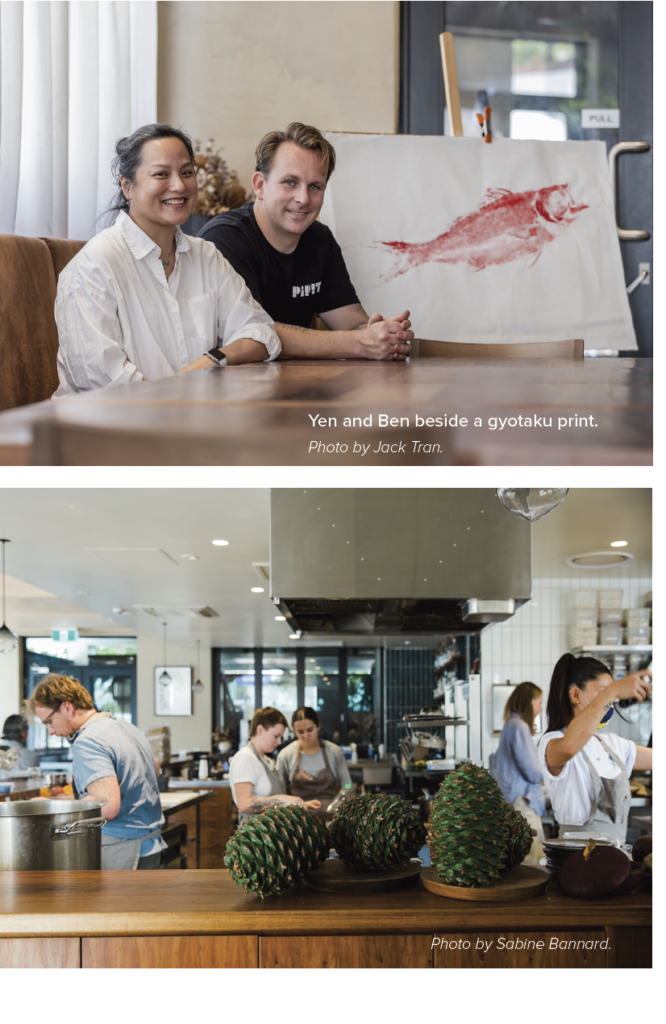
Over seven years in Pottsville, award-winning Pipit has become a place where food, design and community meet through practice. Ben Devlin and Yen Trinh come from different directions, kitchens and design, but work from the same space.
Yen’s background is in urban and experience design.
“Before Pipit, my career was in design (urban design, experience design, graphic design) so I’ve always been interested in creative process and systems,” she says. “I still use design-thinking frameworks in Pipit and with the team.”
She describes the restaurant as a system rather than a venue, where decisions around food, sourcing and experience connect across producers and the local area.
That approach has shaped Pipit over time, including how sourcing and
production are organised and how ideas move through the business.
For Ben, the work starts in the kitchen.
“Cooking started for me as flavour,” he says. “Over time it became about reframing ingredients.”
That process extends beyond cooking into how ingredients are looked at and worked with.
Making in Practice
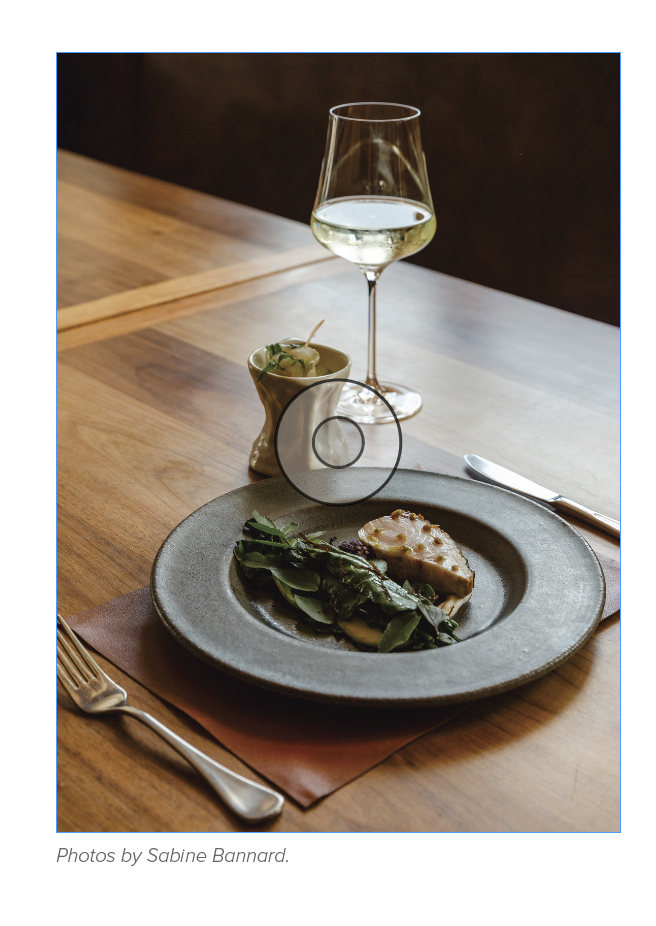
Everything at Pipit is made in-house, bread, ferments, cured meats, pasta, ice-cream. The kitchen works through repetition and technique, responding to seasonal produce.
Waste is treated through use. Wood fire cooking, fermentation and whole-animal preparation carry ingredients further and reduce discard.
The menu changes with availability rather than set cycles.
The Kitchen as Experience
The kitchen is open to the room. Guests see service as it happens, with chefs cooking, plating and serving in view.
Ten seats sit along the Chef’s Counter, placing guests close to the pass and the movement of service.
“The openness gives the team direct feedback from guests,” says Yen “It changes the energy of the space.”
Pipit offers both smaller à la carte meals and longer set menu dining.With 28 seats, service stays small.
Dining is structured around time and local produce. Their signature experience is the six- to eight-course set menu designed to slow the pace of dining and build more connection to the team and storytelling of the food.
“No rushing, no interruptions,” notes Yen. “Just good food, drinks and conversation.”
Printing the Story of a Catch
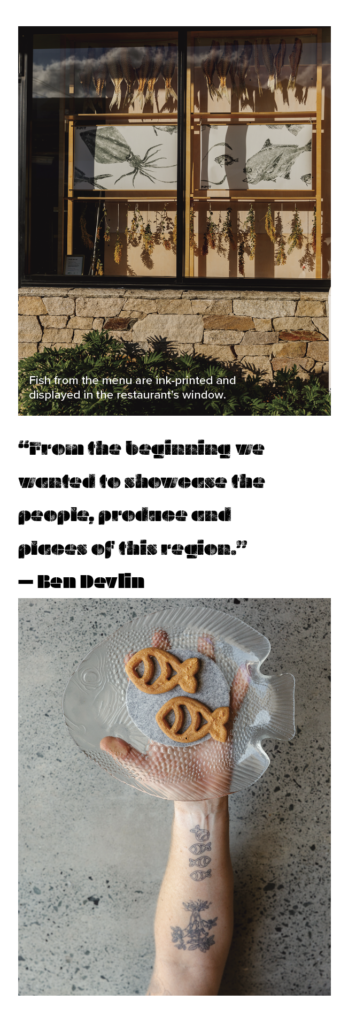
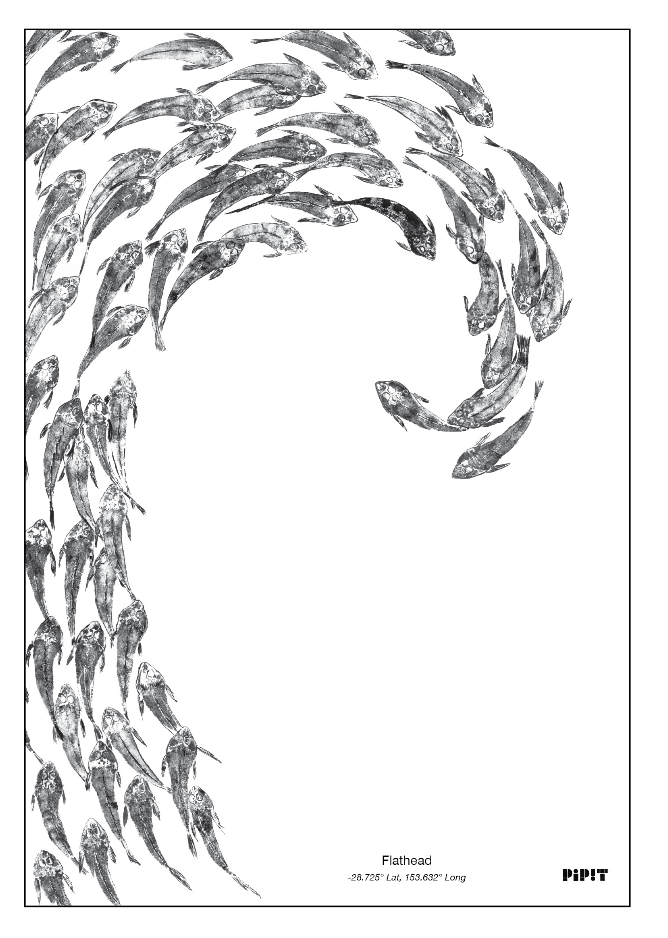
Pipit extends its work into image-making through gyotaku, a traditional Japanese method of fish printing used by fishermen to record their catches. The process involves applying ink directly to the fish and pressing rice paper over it to capture its form in detail.
At Pipit, the technique has been adapted through the kitchen. Fish used on the menu are printed in ink and displayed in the dining room, extending their presence beyond the plate.
“Gyotaku changed how I see things,” says Ben. “Understanding the biology changes how you place it in a print.”
Each print becomes a record of shape, texture and movement, sitting between documentation and artwork. It is both reference and object.
The process feeds back into the kitchen, where ingredients are considered differently before they are cooked.
Form, texture and movement become part of the starting point.
It reinforces whole-use thinking and reduces waste.
The prints sit in the room as part of service, shifting between object, record and artwork.
Dining Connected to Place
Community runs through Pipit’s sourcing. The restaurant works with growers, fishers and producers across the Tweed Shire and nearby region.
“From the beginning we wanted to showcase the people, produce and places of this region,” says Ben.
Pipit spends around $60,000 a year on sustainable seafood through the Good Fish Project, supporting smaller operators.
“When you think about that amount as someone else’s salary, it changes how you think about where your dollars go,” notes Ben.
Alongside suppliers, the restaurant receives regular calls from locals offering backyard produce, excess harvests or ingredients they cannot use. This has become the “Community Trees Program.”
During bunya nut season, locals arrive with buckets from nearby trees.
“It comes from people calling us with what they have,” adds Yen. “We try to use it where we can.”
The exchange sits alongside formal sourcing, forming a wider loop between kitchen and region.
Where Pipit Goes Next
Pipit continues to evolve across food, sustainability and creative work. The restaurant and its image-making practice sit within the same approach to storytelling.
“Sometimes a single plate or Instagram post can’t hold the whole story,” explains Ben. “We’re always exploring different ways to share it.”
Plans include expanding commissions, events and shared food and print experiences.
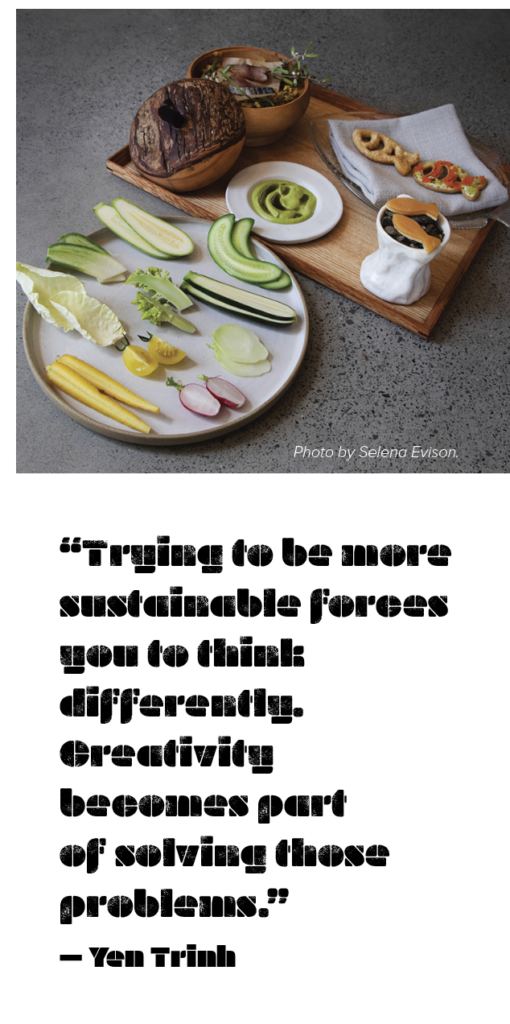
Yen references Silo UK as an influence. “Trying to be more sustainable forces you to think differently,” she says. “Creativity becomes part of solving those problems.”
As hospitality shifts, the mix of food and art has added resilience while keeping the work close to place.
At its core, Pipit remains focused on local produce, seasonal cooking and direct relationships. Food records place. Art records process. Community keeps the story moving.
To experience more of Pipit Restaurant, visit pipitrestaurant.com.
Open Thursday to Monday
Set Menu = Fri, Sat dinner + Sun lunch
A la Carte = Thurs, Mon dinner + Fri, Sat lunch