


From Island Childhood to Ocean Advocate
When Jasmin Oceana was four years old, she was living on a small island in Thailand, swimming in the ocean every day just metres from her home. One question shaped her future: “What work would I have to do to be able to be with dolphins and whales every day?”
As soon as she learned the answer, she knew. She would become a marine biologist.
That early certainty became a career, though not without challenges. Marine science, like many STEM fields, has long been male-dominated. That’s why Jasmin founded Oceana Wildlife: to be the one taking action. As founder and director, she now travels with her daughter, teaching rangers and pioneering coral restoration projects with leading coral experts in Australia and abroad.
For Jasmin, the greatest barrier wasn’t ability, but motherhood. Field research is hands-on and often overseas, with limited support for women wanting to bring children along. Remaining in the industry required persistence, adaptability and a strong sense of purpose.
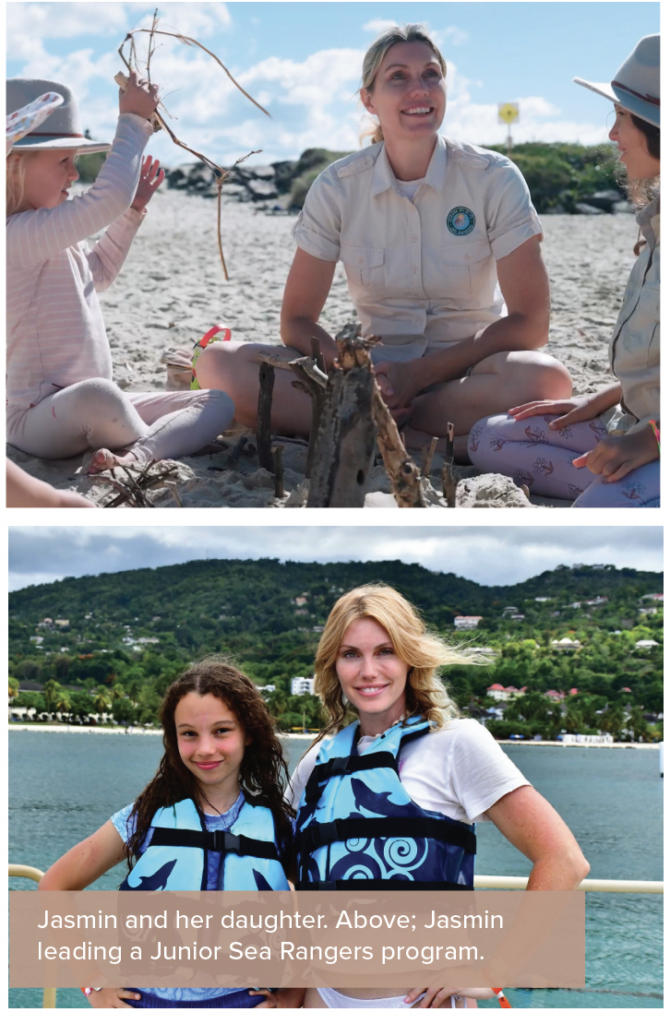
Today, Jasmin channels that purpose into inspiring the next generation through hands-on marine and environmental education. She believes confidence, not capability, is where many girls are lost. “At a very young age, girls learn that it’s more important to be pretty than to be intelligent or playful,” she says. Between the ages of nine and twelve, when confidence often dips, many girls quietly step away from science.
Her response is to take learning outdoors.
When girls are on the beach, in the ocean, or listening to bird calls instead of scrolling screens, something changes. “I see their eyes light up with wonder.” Science stops feeling abstract and becomes lived experience. On field trips, girls have confidently answered expert questions, suggested their own ideas for protecting wildlife and overcome fears to dive into open water. One moment stands out, after surfacing from a dive, a group of tween girls declared, “If this is science, we’re in!”
For girls who love the ocean but don’t see themselves as “science people,” Jasmin’s advice is simple: follow curiosity. Read, draw, and research their favourite wildlife. “Science really is just about being curious.”
About the Program
The STEM Girls Junior Sea Rangers program runs fortnightly on the Tweed Coast at Hastings Point, offering full-day homeschool classes and Saturday sessions during term, with programs also delivered in Byron Bay, Ballina, Yamba, the Gold Coast, Melbourne and the Mornington Peninsula.
A core part of the program is the First Nations Sea Ranger STEM scholarship initiative, supporting girls aged 9–16 and youth 17+ to access marine and environmental science education. Extension programs include opportunities to travel to the Great Barrier Reef and internationally, working alongside leading coral researchers on diving and hands-on coral restoration projects. Businesses can also support these initiatives through sponsorship, with recognition on uniforms and research equipment.
School bookings and program enquiries can be made via bookings@oceanawildlife.org, with donation enquiries at rangers@oceanawildlife.org.
As Jasmin puts it, “Every second breath we take starts from the sea. No ocean – no us.” Bringing girls and women into the ocean science fields is essential to create a better future for all of us.