


Rooms That Hold Our Stories
Words Kirsty Porter
When Tweed Coast Living asked me to write this piece, I felt quietly honoured — not because I consider myself a designer in the formal sense, but because homes like ours reflect something many people feel but don’t always articulate.
A few years ago, we moved an old Queenslander house on the back of a truck to be our new home. Since then, styling, telling stories through lived objects has become a passion project, not a job or a business, but a lived-in exploration of what makes a home feel settled and personal.
It was a way of carrying the last 18 years of raising our family, the memories, rhythms and stories that held us, layered with pieces inherited from past generations, and allowing them to settle naturally into a new home that felt instinctively ours.
I don’t practise interior design traditionally. What I’m often asked to share with friends, family, and close connections is a way of thinking about space. Curated Living Design is one that prioritises feeling over finish, and connection over perfection. It’s an approach shaped by curiosity, intuition, and a long-held interest in how spaces flow and function.
At its core, this way of styling starts with a simple truth: everyone already has a style. Most people
instinctively know what they’re drawn to, coastal, rural, modern, mid-century, eclectic. But style doesn’t end with identifying an aesthetic. That’s just the framework.
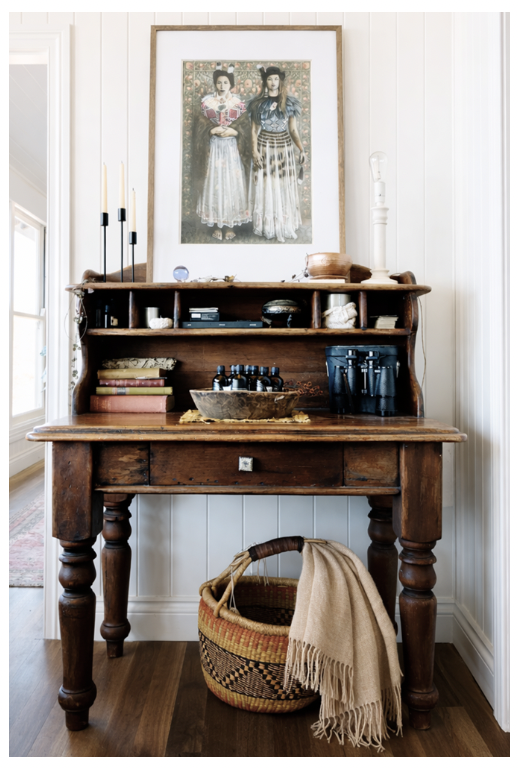
What gives a home depth is what’s layered within it. Everyday family pieces. Children’s, families artwork. Inherited furniture. Objects that hold memory. These things don’t need to make sense to anyone else. They’re the pieces that quietly anchor a space and make it feel lived in.
Rather than styling rooms for a single “now” moment, I’m drawn to homes that feel collected over time. Spaces that evolve gradually, reflecting how life actually unfolds. Rooms that hold memory, routine, and imperfection, spaces that support rather than perform.
When moving homes, especially after many years in one place, there’s often a temptation to start fresh. But continuity matters. Carrying pieces forward, allowing them to find new context, and letting them sit alongside newer elements creates a sense of grounding that can’t be rushed.
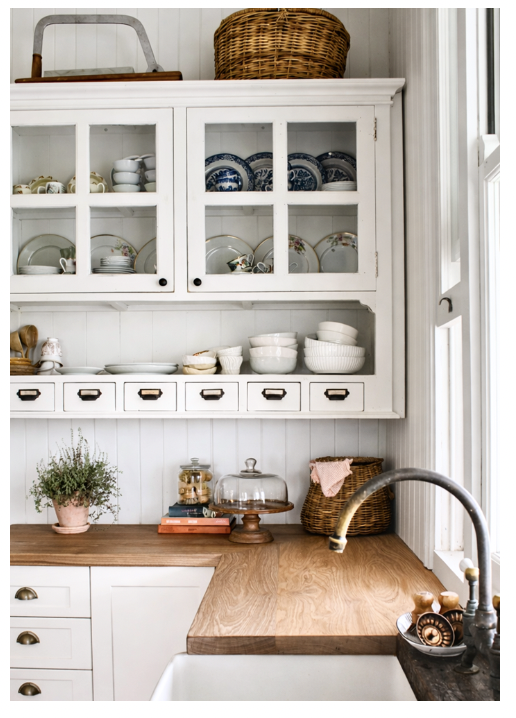
This approach may sit outside formal design rules, but it speaks to something deeply human. When objects are grouped thoughtfully, when functional pieces are layered with personal ones, and when spaces are given time to breathe, a home begins to tell a story, not of trends, but of the people within it.
Ultimately, good style isn’t about getting it “right.” It’s about creating spaces that reflect life as it’s lived, imperfect, layered, and deeply personal.
Three Takeaways to Share
1. Understand your style, then build your story around it
Use your functional pieces as a foundation, then layer in what matters to you. Personal objects don’t need justification, they give your home its voice.
2. Let meaningful pieces lead the way
Objects with history bring warmth that trends never will. Style them together so they feel like part of a story, not isolated moments.
3. Let your home evolve as you do
The most meaningful spaces are shaped slowly, through
living, remembering and adding over time.
When a space reflects the people who live there, it stops being a house and starts being a story.
Kirsty is a long-term local living in Round Mountain, Northern NSW, where home is an ongoing, layered story shaped by living, memory and creativity. She’s also a Digital Marketing Specialist by day where creativity simply shows up a little different. Catch more of her Queenslander and farm life on Instagram @lazyacres2484.